
What used to feel like harmless fun has turned into something far more serious. In 2025, video game addiction has grown from a concern to a full-blown crisis, especially for kids and teens glued to games like Fortnite, Roblox, and Minecraft. Behind the flashy graphics, many of these games are designed to keep players hooked, no matter the cost. Parents across the country are deciding to file a video game addiction lawsuit, claiming these games were designed to be addictive on purpose—and that the companies behind them never gave proper warnings about the risks. From loot boxes and microtransactions to dopamine-driven reward loops, the tactics being used are damaging the lives of countless people.
Here’s a breakdown of exactly what these lawsuits are about: who’s being sued, how addiction shows up in young gamers, what kind of compensation families might see in a video game addiction lawsuit payout, what steps you can take if you’re ready to hold these companies accountable, and how Ethen Ostroff Law can help.
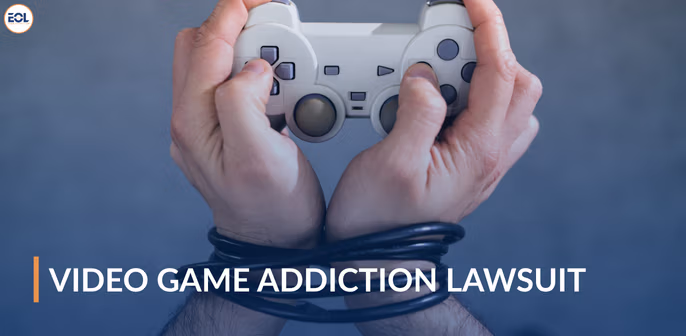
Ever seen a kid completely zoned out in front of a screen, locked in, barely blinking, barely hearing you? That’s not just typical screen time. Video game addiction, or gaming disorder, is when someone loses control over their gaming habits. It’s more than playing a lot—it’s when the game starts calling the shots, and everything else falls behind. Sleep, school, friends, meals—none of it matters as much as getting back in the game.
The World Health Organization officially classified gaming disorder as a real mental health condition. The American Psychiatric Association is paying attention too, especially because this hits kids the hardest. Why? Because their brains are still developing, and they’re wired for reward-seeking. Game developers know this. And they build games specifically to tap into it.
Many of today’s most popular games are engineered with feedback loops, dopamine triggers, and psychological tactics that make walking away feel impossible. And kids are the prime target. They’re being hit with push notifications at school, peer pressure from classmates, and constant in-game rewards that feel just like winning—over and over again.
Parents are noticing the shift. Kids who used to be outgoing are withdrawing. Homework doesn’t get done. Bedtime routines are a fight. Some even show withdrawal symptoms—irritability, anxiety, outbursts—when asked to turn the game off. It’s no accident. The industry is cashing in big on this kind of engagement.
In 2023, the global video game industry pulled in $365 billion. That’s more than the film and music industries combined. There’s no denying the scale. And the more addictive the games, the more money they make.
This isn’t just about too much screen time anymore. It’s about how far companies are willing to go to keep kids glued to their products—and how real the consequences have become.
Video game addiction is rooted in how modern games are intentionally designed to keep players locked in—especially kids and teens. These aren’t the games we grew up with. Today’s titles are engineered using a blend of psychology, tech, and behavioral science to keep people playing longer than they ever meant to.
Here’s a look at how that cycle begins—and why walking away can feel nearly impossible:
There’s a growing body of research that dives into how video game addiction and internet gaming disorder affect the brain and body—especially in kids and teens. These aren’t just “too much screen time” situations. The science points to real changes in brain function, behavior, and mental health.
Here’s a breakdown of what the research shows:
Video game addiction doesn’t affect everyone who plays video games. For some people, games are just a fun way to unwind. But for others, it can take over their lives—especially if they’re already going through certain challenges. Here’s who tends to be most at risk:
Video game addiction isn’t just about too much screen time. It can start to really impact kids in all sorts of ways—affecting how they feel, think, and even their physical health. Here’s what that might look like:
Sometimes, it starts small—just a little extra time in front of the screen after school. But before you know it, gaming takes up more and more space in your kid’s life. If you’re wondering whether it’s becoming a problem, here are some signs to look out for:
If you’re seeing several of these signs, it might be time to talk with your child—and maybe a professional—about what’s really going on behind the screen.
When gaming starts to take up too much space in your child’s world—messing with their sleep, schoolwork, or social life—it’s time to step in. There’s no magic fix, but there are ways to help them take back control without turning it into a power struggle.
Here’s what can really help:
CBT (Cognitive Behavioral Therapy): This isn’t just about talking—it’s about helping your kid spot what’s pushing them toward games (like stress, boredom, or feeling left out) and giving them better ways to deal with it.
Individual Counseling: Sometimes kids need to talk to someone who isn’t a parent or teacher. Just having that space to open up without pressure can go a long way.
Family Therapy: Gaming can create tension at home, especially when it turns into daily arguments. Family sessions help everyone understand each other better and make a plan that works.
Peer Support Groups: Kids often don’t want to hear it from adults—but hearing from others their age who’ve been through it can hit differently. It makes them feel less alone.
Recovery Programs: Some teens do better with structure. There are programs out there—online and in person—that offer a routine, accountability, and support from professionals who get it.
Short Breaks from Screens: A weekend away from gaming can be eye-opening. No pressure to quit forever—just enough time to reset.
Easing Off Slowly: Going cold turkey doesn’t always work. Swapping some game time for other stuff they enjoy (sports, music, art, even just hanging with friends) helps the transition feel less like punishment.
Supervised Settings: If things feel out of control, some families look into programs where kids can step away from screens completely and reset in a safe, structured environment.
Even without professional help, small changes can make a difference:
This isn’t about banning video games. It’s about helping kids reconnect with life beyond the screen—bit by bit, in a way that feels doable.
It’s worth addressing sooner rather than later if your kid is spending a lot of time on games. Here’s how to get things back on track without turning it into a big battle:
You can help your child find a healthy balance with their gaming habits with the right mix of boundaries, support, and open conversations—without losing their love for it completely.
Video game addiction is becoming a bigger concern, especially as gaming has evolved into a multi-billion-dollar industry. Games today are designed to keep players hooked, often using features like loot boxes and microtransactions. These features make it harder for kids and teens to pull away from games, causing real-life problems like poor grades, sleep issues, and physical health problems.
It’s easy to dismiss video game addiction as just kids having fun. However, the effects can be far-reaching. Gaming disorder, recognized by the World Health Organization, can seriously disrupt daily life and mental health. Games like Fortnite and Roblox are prime examples of how these addictive elements show up. Parents often don’t realize how dangerous it can get until it’s too late—relationships are strained, school performance drops, and health starts to suffer. The rise of lawsuits around video game addiction is a wake-up call, urging developers to take responsibility for the harm their designs can cause.
Video game addiction lawsuits are legal actions taken by families who believe that certain video game developers and companies are responsible for the harm caused by their addictive games. These lawsuits claim that game developers intentionally design games to keep players hooked, often leading to addiction.
The idea behind these lawsuits is that these game companies didn’t do enough to warn users, especially younger players, about the potential risks of becoming addicted to their games. Families argue that the addictive nature of these games can lead to serious emotional, physical, and social issues, from poor grades and sleep deprivation to strained relationships and health problems.
Video game addiction lawsuits are an attempt to hold game developers accountable for creating games that some players can’t walk away from, often at the cost of their well-being.
Video game addiction lawsuits are tackling some serious concerns about how certain games are designed to keep players hooked, especially young ones. The main focus of these cases is the idea that game developers intentionally included features that make games more addictive. Here are the key allegations that have come up:
These allegations shine a light on whether game companies should be doing more to make sure their products are safe, especially when they’re targeting kids and young adults.
The lawsuits name several of the biggest game developers behind the titles many kids and teens play daily. Here are some of the companies being sued and the games they’re known for:
These lawsuits claim the games developed or distributed by these companies that target minors include addictive features, like loot boxes, microtransactions, and reward systems that mimic gambling or encourage compulsive play.
Here’s a quick look at some of the games most commonly cited in video game addiction lawsuits, along with what they’re about:
These games are often highlighted for using strategies like loot boxes and reward systems, which are believed to encourage compulsive gaming behaviors.
If you’re considering filing a video game addiction lawsuit, it’s important to understand the process and the steps involved. These lawsuits are a way to hold game developers accountable for the addictive qualities of their products. Here’s how you can get started:
The filing process is essential in holding gaming companies accountable for their role in addiction, and with the right legal help, it can lead to positive change.
If you’re worried about your child’s gaming habits and considering a video game addiction lawsuit, you’ll need to gather solid evidence to show just how much the games have affected their life. It’s about the impact it’s having on their mental and physical health, schoolwork, and relationships. Here’s a look at the kinds of evidence that can help make your case:
With the right evidence in video game litigation, you can hold gaming companies responsible for the harm they’re causing.
Thinking about filing a video game addiction lawsuit? Here are some things to consider:
At the end of the day, it all comes down to how gaming has impacted your life. Has it hurt your health, relationships, or your work or school performance? For parents, guardians, or those involved in a minor’s life, a chat with Ethen Ostroff Law can help guide you through your options and figure out if pursuing a claim is the right choice for you.
If you’re thinking about filing a video game addiction lawsuit for yourself or your child, there’s a good chance you could be entitled to some serious compensation for the damage done by excessive gaming. Here’s a rundown of the kinds of damages that might be up for grabs:
For parents of minors, additional damages may be available to cover medical bills, legal fees, therapy, and rehabilitation costs, as well as compensation for any long-term impact on the child’s social, academic, or emotional development. This can help address the wide-reaching effects of gaming addiction on both the individual and their family.
Compensation is for all the ways it affects lives, both on a personal and a family level. That’s what these damages are all about: helping you recover from a situation that’s way bigger than just a few too many hours in front of a screen.
When it comes to filing a video game addiction lawsuit, the deadline can vary depending on where you live. In Pennsylvania, for instance, the statute of limitations for personal injury or product liability claims is usually 2 years from the date the harm happened. This means you generally have two years from when the addiction or related damage first became clear to take legal action.
But life isn’t always that simple. If the person affected was a minor at the time, they might have more time to file once they turn 18, as the clock starts ticking then. There are also other factors that could either shorten or extend the time you have, so it’s really important to consult a lawyer sooner rather than later to avoid missing any critical deadlines.
If you’re unsure about your situation, reach out to one of our video game addiction lawyers at Ethen Ostroff Law. We’ll help you navigate all the legal details and file your gaming addiction lawsuit in the right time frame, giving you one less thing to worry about.
April 2025 – Parents Sue Developers Over Youth Addiction Crisis and Lawsuits Gain Momentum: A growing number of lawsuits accuse video game companies of exploiting young users for profit. Plaintiffs claim developers chose to enhance addictiveness instead of building in safety controls. Courts are now hearing arguments, though attempts to consolidate into multidistrict litigation were denied. Allegations include psychological manipulation, data harvesting, and failure to warn. Some cases are pushing for parental controls and clearer addiction warnings, with potential payouts exceeding $250,000.
March 19, 2025 – Study Finds Addiction Linked to Teen Depression and Anxiety: New research reveals a connection between video game addiction and increased rates of anxiety and depression in teens. Strong social support appears to reduce these effects.
March 8, 2025 – New Lawsuit Filed in Los Angeles Against Major Game Companies: A family sues Roblox, Epic Games, Microsoft, and Mojang over a 13-year-old’s compulsive gaming habits. The case cites emotional distress, monetization schemes, and psychological targeting.
March 5, 2025 – Illinois Video Game Addiction Case Sent to Arbitration: An Illinois judge sends a video game addiction lawsuit to arbitration. The plaintiff argues that games like Fortnite and Roblox caused academic decline and emotional harm.
March 3, 2025 – Lawyers Focus on Games Targeting Kids: Legal teams ramp up suits against developers allegedly designing games to hook children. Many of these cases are concentrated in California, home to companies like Roblox.
February 14, 2025 – Explainer Video on Video Game Lawsuits Released: A new video from a law firm breaks down video game addiction lawsuits, outlining potential legal claims and what successful outcomes might include.
February 7, 2025 – New Study Confirms Aggression Link: A follow-up study confirms a connection between gaming addiction and aggressive behavior in teens, supporting arguments used in current lawsuits.
February 3, 2025 – Study Links Violent Games to Aggression in Teens: Researchers find that addiction to violent video games is associated with increased aggression in adolescents.
January 16, 2025 – Study Highlights How Game Design Encourages Addiction: New research explains how in-game rewards and social mechanics mimic addiction patterns found in substance use disorders, especially among kids.
January 2, 2025 – New Lawsuit Targets Roblox and Fortnite Developers: A California family files suit against Roblox and Fortnite creators, accusing them of embedding addictive features and ignoring safety protections.
December 26, 2024 – California Mom Sues Roblox and Epic Games for Child’s Addiction: A mother sues Roblox and Epic Games, alleging her 12-year-old’s emotional and social issues were caused by game addiction. She claims the games were deliberately designed to be addictive.
December 13, 2024 – Study Finds Up to 10% of Teens Addicted to Online Games: A Frontiers in Psychology study suggests 1%–10% of teens in the West meet the criteria for Internet Gaming Disorder. It calls for updating the DSM-5 to better reflect modern gaming addiction.
December 27, 2017 – “Gaming Disorder” Recognized by World Health Organization: In a tentative update to the 2018 International Classification of Diseases, the WHO announced plans to officially recognize “gaming disorder” as a mental health condition. This marked one of the first global acknowledgments of gaming addiction as a serious issue.
Suing a video game company for addiction isn’t easy. These cases are still pretty new, and there are a lot of things that can make them tough. Here’s why:
Even with all these challenges, these lawsuits are starting to get more attention. Families are speaking up, and more people are realizing how some games are designed to be way too addictive—especially for kids.
If you’re reading this because your child is struggling with video game addiction, you’re likely exhausted, frustrated, and searching for answers that actually make sense. You’re not overreacting. You’re not imagining it. And you’re definitely not alone.
The video game addiction lawsuits aren’t just legal battles—it’s about how some of the world’s biggest companies have knowingly designed games to keep kids hooked, even when it leads to real emotional and psychological harm. As lawsuits continue to surface, it’s becoming clearer that families have a right to demand accountability.
At Ethen Ostroff Law, we’re here to help families like yours take that next step. We do more than filing paperwork—we listen, we care, and we fight for change.
Reach out for a free consultation now. Let’s talk about what happened, what your options are, and how we can help you move forward.
Internet Gaming Disorder, or IGD, happens when gaming stops being just a hobby and starts interfering with real life—school, relationships, mental health, and more. It’s when someone feels stuck in a cycle they can’t break, even when it’s clearly causing harm.
Some signs of IGD include:
When game developers build in features designed to keep kids hooked, and those features lead to serious issues like IGD, families may have legal options. Filing a video game addiction lawsuit can be one way to hold companies accountable for prioritizing profits over people.
Yes. Dozens of families across the country have already filed lawsuits, saying game developers designed their products to be addictive on purpose. These cases are about real harm: emotional struggles, family breakdowns, financial stress, and kids losing control. The goal isn’t just compensation. It’s about holding these companies accountable and pushing for safer, more responsible design. If your family has been affected, a free case review can help you understand your options.
You may qualify if you or your child experienced serious challenges tied to excessive gaming—like emotional struggles, falling grades, missed work, behavior changes, or even physical issues like carpal tunnel. These lawsuits focus on the real impact gaming has had on daily life. If addictive game design played a role, you could have a case.
Settlement amounts can differ from case to case. It often depends on factors like therapy or rehab costs, missed work or school, medical bills, and how severely someone was affected. While there’s no set number, Ethen Ostroff Law will push for the highest possible payout based on what you and your family have gone through.
You shouldn’t have to worry about legal fees when you’re already dealing with the emotional and financial toll of video gaming addiction. That’s why we don’t charge anything upfront at Ethen Ostroff Law. You only pay if we win for you. It’s one less thing to stress about while we focus on getting your family the justice and support you deserve.
As of March 2025, there’s no class action for video game addiction. Courts decided the cases were too different—different games, different injuries, different companies—to combine them into one. But that doesn’t mean you’re out of options. Families can still file individual claims, and many already have. Reach out to Ethen Ostroff Law to see if your case qualifies.
His career began in public service as a Surveillance Officer in Maricopa County, where he gained firsthand experience in high-stakes decision-making and developed a deep sense of discipline and accountability. He later served as Chief Operating Officer of a fast-growing law firm, driving efficiency, revenue growth, and team development. Today, Ryan focuses on helping law firms reach their full potential by aligning people, processes, and long-term vision. A strategic thinker and empowering leader, Ryan is passionate about developing others and guiding organizations through meaningful, lasting growth.
Effective Date: July 10, 2024
General Information
Welcome to the website of Ethen Ostroff Law, PLLC (“EO”). By accessing or using our website, you agree to be bound by these Terms and Conditions (“Terms”). If you do not agree with these Terms, please do not use our website.
Use
EO hereby grants you a non-exclusive, non-transferable, revocable, limited right and license to access and use the Site solely for your personal use in accordance with these Terms of Use. You shall not, in any way, otherwise copy, reproduce, distribute, transmit, display, perform, reproduce, publish, license, modify, create derivative works from, sell, or exploit the Site.
EO may at any time, for any reason, and without notice or liability: (a) modify, suspend, or terminate operation of or access to the Site and related services, or (b) change, revise, or modify the Site and affiliated services.
Messaging and Automated Calls
When you opt-in, you will receive text messages (SMS/MMS) on your mobile number. These messages may contain information about your case, and the message frequency may vary from user to user. Please note that message and data rates may apply. If you wish to opt out of this service, you can do so anytime by simply texting “STOP” to the phone number. Once you text “STOP” to us, we will send you an SMS to confirm that you have been unsubscribed. If you encounter any issues, you can reply with the keyword “HELP” to get assistance. Please be aware that carriers are not responsible for any delayed or undelivered messages.
By providing your phone number and submitting a form on our website, you consent to receive communications, including automated calls, texts, and pre-recorded messages, from EO and its affiliates. These communications may include updates about your case, promotional offers, and other information. You understand that these calls may be generated using automated technology, and that standard message and data rates may apply.
Your consent to receive automated calls is not a condition of any purchase or service. By checking the consent box on our contact form or by calling our firm, you agree to these Terms and Conditions and provide your written consent to receive these communications. You may opt out of these communications at any time by replying STOP to any text message or by contacting us at [insert contact information].
State-Specific Compliance
EO complies with all federal and state laws regarding automated calls and telemarketing practices. Certain states have additional restrictions on the use of automated dialing systems and pre-recorded messages. The following states have more restrictive regulations:
If you are a resident of one of these states, EO will obtain your prior express written consent before making any automated calls or sending pre-recorded messages to you.
By submitting a form inquiry or calling our firm, you agree to us contacting you, and your checking the box when submitting your form inquiry serves as written consent.
Information and Legal Disclaimer
The information contained in this website is for informational purposes only, and should not be construed as legal advice. Testimonials and case results contained in this website are for demonstrative purposes only, and do not constitute a guarantee of any particular outcome in a specific case.
By requesting a free consultation with Ethen Ostroff Law, PLLC, you agree to the following:
The law differs in every jurisdiction, and you should not rely on any opinion except that of an attorney you have retained, who has a professional duty to advise you after being fully informed of all the pertinent facts, and who is licensed in the applicable state, and is familiar with the applicable law. Internet subscribers, mobile application users, and online readers should seek professional counsel about their legal rights and remedies. You should not act or refrain from acting on the basis of any information found on the Site. Any actions or decisions about your legal rights should be based on the particular facts and circumstances of your situation, and appropriate legal advice from an attorney retained directly by you. EO EXPRESSLY DISCLAIMS ALL LIABILITY WITH RESPECT TO ACTIONS TAKEN OR NOT TAKEN BASED UPON ANY INFORMATION OR OTHER CONTENTS OF THIS SITE. Viewing the Site, or communicating with EO by Internet e-mail or through the Site does not constitute or create an attorney-client relationship with anyone. The content and features on the Site do not create, and are not intended to create, an attorney-client relationship, and shall not be construed as legal advice. The content and features of the Site, including means to submit a question or information, do not constitute an offer to represent you or otherwise give rise to an attorney/client relationship.
THE SITE IS PROVIDED “AS IS”. EO MAKES NO WARRANTIES, EXPRESS OR IMPLIED, REGARDING THE SITE AND ONLINE SERVICES AND HEREBY DISCLAIMS ALL WARRANTIES OF ANY KIND OR NATURE, INCLUDING, WITHOUT LIMITATION, THE IMPLIED WARRANTIES OF MERCHANTABILITY, FITNESS FOR A PARTICULAR PURPOSE, ACCURACY, AND NON-INFRINGEMENT. WITHOUT LIMITING THE FOREGOING, EO DOES NOT GUARANTEE THAT THE ONLINE SERVICES OR PRODUCTS WILL MEET YOUR REQUIREMENTS, OR WILL BE ERROR-FREE, UNINTERRUPTED, OR FREE OF VIRUSES OR OTHER HARMFUL COMPONENTS, OR THAT ANY DEFECTS WILL BE CORRECTED.
Accounts
To use some features of the Site, you may be required to create an account. In connection therewith, you agree to provide and maintain true, accurate, current, and complete information about yourself. You are responsible for maintaining the confidentiality of the information you hold for your account login, including your password, and for all Submissions made from your account. You agree to notify us immediately of any unauthorized use of your login. EO may suspend access to your account if it suspects illegal or improper use, or for other reasons, such as for account management purposes, at its sole discretion.
Confidentiality is Not Guaranteed
Information sent to Ethen Ostroff Law, PLLC. via Internet e-mail or through the Site is not secure and is done on a non-confidential basis. EO may make reasonable efforts to keep communications private, but because of the nature of Internet communications and the absence of an attorney/client relationship, we cannot promise or guarantee confidentiality.
DISCLAIMER – This Site Does Not Provide Medical Diagnosis or Advice
The content provided on the Site, such as documents, text, graphics, images, videos, news alerts, pharmaceutical drug recalls, prescription medication history, or information on litigation concerning the foregoing topics, or other materials, is for informational purposes only. The information is not intended to be a substitute for professional medical advice, diagnosis, or treatment. Always consult a physician for diagnosis and treatment of any medical condition or for any questions you may have regarding a health concern. Never disregard professional medical advice, alter a prescription plan in any way, or delay or refrain from seeking medical advice because of something you have read or seen on the Site. Links to other sites are provided for information only. Use of trade names is for identification only and does not constitute endorsement by EO.
Without limiting the generality of the foregoing, the Site may present information about pharmaceutical drug recalls, which is for information purposes only. Such information is not necessarily the most current information on the subject and may or may not be updated based on the last information concerning such recalls. Do not make any decisions regarding medication or medical providers based on information from the Site, including but not limited to information we provide about drug recalls.
EO Is Not Responsible for Content; Limitation on Liability
EO may periodically change, remove, or add the material on the Site without notice. This material may contain technical or typographical errors. EO DOES NOT GUARANTEE ITS ACCURACY, COMPLETENESS OR SUITABILITY. EO assumes no liability or responsibility for any errors or omissions in the contents of the Site. Your use of the Site is at your own risk. Under no circumstances shall EO or any other party involved in the creation, production, or delivery of the Site be liable to you or any other person for any indirect, special, incidental, or consequential damages of any kind arising from your access to, or use of, the Site. TO THE MAXIMUM EXTENT PERMITTED BY APPLICABLE LAW IN NO EVENT SHALL EO BE LIABLE FOR ANY SPECIAL, INDIRECT, OR CONSEQUENTIAL DAMAGES RELATING TO THIS MATERIAL, FOR ANY USE OF THIS WEBSITE, OR FOR ANY OTHER LINKED WEBSITE.
Third-party Web Sites
The Site contains links to third-party websites for the convenience of our users. EO does not endorse any of these third-party sites and does not imply any association between EO and those sites. EO does not control these third-party websites and cannot represent that their policies and practices will be consistent with these Terms of Use. If you use links to access and use such websites, you do so at your own risk. EO is not responsible for the contents or availability of any linked sites. These links are provided only as a convenience to the recipient. These Terms only apply to the Site and do not apply to any linked sites. We encourage you to read and understand the terms of use of any linked sites that you visit. Links do not imply that we sponsor, endorse, are affiliated with or associated with, or are legally authorized to use any trademark, trade name, service mark, design, logo, symbol, or other copyrighted materials displayed on or accessible through any linked site.
EO Clients
Only individuals who have entered into a mutually signed retainer agreement with EO are EO clients (“EO Clients”).
Legal and Ethical Requirements
EO has tried to comply with all legal and ethical requirements in compiling the Site. We welcome comments about our compliance with the applicable rules and will update the Site as warranted, upon learning of any new or different requirements.
Ethen Ostroff Law reserves the right to refer or sell leads that come through any of Ethen Ostroff Law’s marketing.
Ethen Ostroff Law also may sell leads on certain campaigns generated in association with third party marketing companies.
Governing Laws in Case of Dispute; Jurisdiction
These Terms of Use shall be governed by and construed in accordance with the laws of the State of Pennsylvania, USA, without regard to any choice of law principles. Any and all disputes arising hereunder shall be governed as set forth in the Arbitration section below.
Submissions
You are solely responsible for any information, content, or material you transmit to or through the Site (“Submissions”). You understand that Submissions are considered non-confidential and non-proprietary. Furthermore, you grant EO an unrestricted, irrevocable, perpetual, transferable, sublicensable, worldwide, royalty-free license to use, copy, reproduce, display, publish, publicly perform, transmit, and distribute any Submission, without compensation or accounting to you or anyone else. You represent and warrant that: (a) you have the right to submit the Submission to EO and grant the licenses as described above; (b) EO will not need to obtain licenses from any third party or pay royalties to any third party for its use of the Submission; (c) the Submission does not infringe any third party’s rights, including intellectual property rights and privacy rights; and (d) the Submission complies with these Terms of Use and all applicable laws and regulations.
EO takes no responsibility and assumes no liability for any Submission.
Arbitration
Any and all claims by you arising out of or related to the Site or your use thereof may be resolved only through a binding arbitration proceeding to be conducted under the auspices of the Commercial Arbitration Rules of the American Arbitration Association in Montgomery County, Pennsylvania. Both your agreement to arbitrate all controversies, disputes and claims, and the results and awards rendered through the arbitration, will be final and binding on you and may be specifically enforced by legal proceedings. Arbitration will be the sole means of resolving such controversies, disputes and claims, and you waive your rights to resolve such controversies, disputes and claims by court proceedings or any other means. You agree that judgment may be entered on the award in any court of competent jurisdiction and, therefore, any award rendered shall be binding. The arbitrator may not consolidate more than one person’s claims, and may not otherwise preside over any form of a representative or class proceeding. You understand that by agreeing to arbitration as a mechanism to resolve all controversies, disputes and claims between us, you are waiving certain rights, including the right to bring an action in court, the right to a jury trial, the right to broad discovery, and the right to an appeal. You understand that in the context of arbitration, a case is decided by an arbitrator (one or more), not by a judge or a jury.
International Use
The Site is controlled, operated, and administered by EO from offices within the United States of America and is only intended for use therein. We make no representation regarding use of the Site outside of the United States.
Other Terms
If, for any reason, our Terms of Use, Privacy Policy, or any portion thereof to be unenforceable, such provision shall be enforced to the maximum extent permissible so as to give the intended effect thereof, and the remainder of these Terms of Use and Privacy Policy shall continue in full force and effect. EO’s failure to act with respect to a breach by you or others does not waive our right to act with respect to that breach or subsequent or similar breaches. No consent or waiver by EO hereof will be deemed effective unless in writing. These Terms of Use, together with our Privacy Policy, as each is currently posted, constitute the entire agreement between EO and you with respect to your use of the Site and supersede all previous written or oral agreements relating to the subject matter hereof, that this agreement shall not supersede, restrict, or replace any agreements governing the attorney-client relationship between EO and EO Clients.
EO may, in its sole discretion and without prior notice, block and/or terminate your access to the Site and if we determine that you have violated these Terms of Use or other terms or agreements or that may be associated therewith or if you use the Site in a way that we deem, in our sole discretion, to be an unacceptable use.
