
A dog bite can be frightening and painful — and the aftermath, with medical bills, possible scarring, and the emotional shock, can be just as hard. If you or your child was bitten in Pennsylvania or New Jersey, you may be able to recover compensation for your injuries, and in many cases you don’t have to prove the dog had ever bitten anyone before. The rules differ between the two states, though, so understanding where you were bitten matters.
Here’s a plain-English look at how dog bite claims work in Pennsylvania and New Jersey, what compensation may be available, who actually pays, and the steps that protect your claim.
In general, the dog’s owner is responsible for injuries their dog causes — but how much you can recover, and what you have to prove, depends on the state. New Jersey and Pennsylvania take notably different approaches.
New Jersey has a strict liability dog bite statute (N.J.S.A. 4:19-16). In plain terms, the owner is generally liable for a bite regardless of whether the dog ever showed aggression before or whether the owner did anything wrong — as long as you were bitten while lawfully on public or private property (including the owner’s property if you were there legally). You don’t have to prove the owner was careless or knew the dog was dangerous. This makes New Jersey one of the more straightforward states for bite victims.
Pennsylvania is more layered. Under Pennsylvania’s Dog Law, a dog owner is generally responsible for the victim’s medical expenses regardless of the dog’s history — you don’t have to prove the owner was negligent to recover those costs. To recover fuller damages, such as pain and suffering, you typically need to show either that the owner was negligent or that the dog had shown dangerous tendencies the owner knew about. Where the dog had a known history, or where the injury is severe, the path to broader compensation is often stronger.
Because of these differences, two identical-seeming bites can play out differently depending on whether they happened in Harrisburg or Cherry Hill. An attorney can apply the right state’s rules to your situation.
People sometimes assume a dog “gets one free bite.” That’s an oversimplification. New Jersey’s statute imposes liability for a bite even with no history at all. Pennsylvania allows recovery of medical costs regardless of history, and fuller damages where there’s negligence or a known dangerous propensity. So a first-time bite can absolutely support a claim in both states — don’t let anyone talk you out of asking.
This surprises many people: a dog bite claim is usually paid by the owner’s homeowner’s or renter’s insurance, not out of the owner’s pocket. That’s an important reason not to feel guilty about pursuing a claim against a neighbor, friend, or family member — you’re typically dealing with an insurance company, and compensation for a child’s injuries or lasting scarring can matter for years to come.
Depending on the state and the facts, a dog bite claim may seek compensation for:
As with other injury claims, there’s no fixed average. A minor bite that heals cleanly is worth far less than one causing permanent scarring, nerve damage, or psychological trauma. Settlement value turns on the severity of the injury, medical costs, the degree of scarring, lost income, the strength of liability, and the available insurance. Facial scarring and injuries to children frequently increase value because of their lasting impact. The reliable way to estimate a case is a review of the specifics.
Insurers commonly argue that the injured person provoked the dog, or was trespassing or otherwise not lawfully present. In New Jersey, lawful presence is part of the statute; in Pennsylvania, provocation and the circumstances can affect a negligence analysis. Comparative negligence can also reduce recovery if the victim is found partly at fault. How the facts are documented early — including what led up to the bite — can blunt these defenses.
Both Pennsylvania and New Jersey generally give you two years from the date of the bite to file a lawsuit. Claims involving children can have different timing, and some deadlines are shorter for claims against public entities. The sooner you act, the easier it is to preserve evidence like photos, vet and animal-control records, and witness accounts.
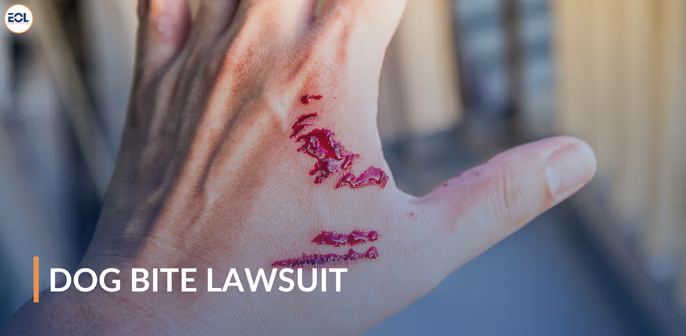
Dog bites can cause far more than surface wounds. Common injuries include deep puncture wounds, lacerations requiring stitches, nerve and tissue damage, broken bones, infections (including the risk of rabies or other bacteria), and permanent scarring or disfigurement. Bites to the face, hands, and head are especially common in children and often carry lasting physical and emotional effects, including anxiety and a fear of dogs. Because infection can set in quickly, prompt medical care is both a health priority and important documentation for a claim.
Most dog bite claims follow a familiar path: you get medical treatment and report the bite, the dog and owner are identified along with the applicable homeowner’s or renter’s insurance, evidence is gathered (photos, animal-control records, witnesses), a demand is presented to the insurer, and the claim is negotiated. Many resolve without a lawsuit, though one can be filed to keep the claim moving or when the insurer won’t be fair. An attorney handles these steps so you can focus on recovery.
An experienced attorney identifies the right state’s rules, locates the available insurance, documents scarring and long-term effects (which heavily influence value), counters provocation or trespassing defenses, and negotiates for full compensation — especially important in cases involving children. At Ethen Ostroff Law, consultations are free and there’s no fee unless we recover for you.
In New Jersey, yes — the strict liability statute applies even with no history. In Pennsylvania, medical costs are recoverable regardless of history, and fuller damages depend on showing negligence or a known dangerous propensity. A first bite can still support a claim in both states.
A dog bite claim is usually paid by the owner’s homeowner’s or renter’s insurance, not by the person directly. Pursuing a claim is typically about accessing that coverage to pay for medical care and other losses, especially for a child.
Provocation and lawful presence can affect a claim, and comparative negligence may reduce recovery if you’re found partly responsible. How the events leading to the bite are documented matters, so it’s worth a review even if you’re unsure.
Children are bitten more often and tend to suffer facial injuries and scarring, which can carry lasting physical and emotional effects. These cases are taken very seriously, and timing rules for minors can differ, so it’s important to get guidance.
It depends on the severity of the injury, scarring, medical costs, lost income, liability, and available insurance. Facial scarring and injuries to children often increase value. A free review is the best way to understand your case.
Generally two years from the date of the bite in both Pennsylvania and New Jersey, with different rules possible for children and shorter deadlines for claims against public entities.
If the injury caused scarring, required surgery, involved a child, or the insurer is minimizing it, an attorney can make a meaningful difference. At Ethen Ostroff Law, consultations are free and there’s no fee unless we recover for you.
Renter’s insurance often includes liability coverage that can apply to a dog bite, and in some situations a landlord may bear responsibility too. An attorney can help identify every policy that might cover your injuries.
A dog bite can leave lasting scars — physical and emotional — especially for children. You shouldn’t have to navigate the owner’s insurance company alone, and pursuing a claim is about getting the care and accountability you deserve. Call Ethen Ostroff Law for a free consultation. We handle claims in both Pennsylvania and New Jersey, we’ll apply the right state’s rules to your case, and there’s no fee unless we win. *Justice For All* — that’s our promise at EOL.law.
His career began in public service as a Surveillance Officer in Maricopa County, where he gained firsthand experience in high-stakes decision-making and developed a deep sense of discipline and accountability. He later served as Chief Operating Officer of a fast-growing law firm, driving efficiency, revenue growth, and team development. Today, Ryan focuses on helping law firms reach their full potential by aligning people, processes, and long-term vision. A strategic thinker and empowering leader, Ryan is passionate about developing others and guiding organizations through meaningful, lasting growth.
Effective Date: 10/15/2026
Ethen Ostroff Law, PLLC (“EOL,” “we,” “us,” or “our”) respects your privacy. If you are reaching out to us after an injury, we know you may be sharing personal details during a hard time. This Privacy Policy explains what information we collect when you visit ethenostrofflaw.com (the “Site”), how we use it, who we share it with, and the choices you have.
This Privacy Policy works together with our Terms of Use. By using the Site, you agree to the practices described here. If you do not agree, please do not use the Site.
Visiting the Site, submitting a form, chatting with us online, or sending us an email does not create an attorney-client relationship. An attorney-client relationship begins only when you and EOL sign a written Retainer Agreement. Until then, information you send us is not protected by attorney-client privilege and is not considered confidential. Please do not send sensitive details about your matter until we have spoken with you.
When you request a free consultation, fill out a form, use our live chat, call, text, or email us, you may give us:
When you visit the Site, we and the third-party tools described in section 8 may automatically collect:
We may share your information with:
If you opt in to text messages, you may receive messages about your inquiry or case. Message frequency varies, and message and data rates may apply. Reply STOP at any time to opt out, or HELP for help. Mobile phone numbers and text message opt-in consent will not be shared with third parties or affiliates for their own marketing purposes.
We do not send the details you type into our intake forms, contact forms, or live chat, such as information about your injury or legal matter, to Google, Meta, TikTok, Reddit, or any other advertising platform.
The Site uses cookies, pixels, and similar tools. A cookie is a small file stored in your browser. A pixel is a small piece of code that loads when you visit a page and sends information about your visit to the company that provides it. We use Google Tag Manager to load and manage these tools.
The table below lists the third-party tools on the Site and what we use them for.
| Provider | What we use it for | Provider privacy policy |
| Google Tag Manager | Loads and manages the other tools listed here. It does not build a profile of you. | policies.google.com/privacy |
| Google Analytics | Understanding how visitors use the Site, such as pages viewed and how they found us. | policies.google.com/privacy |
| Google Ads | Measuring ad conversions and showing our ads to past visitors. | policies.google.com/privacy |
| Meta Pixel (Facebook and Instagram) | Measuring ad performance, showing our ads to past visitors, and reaching similar audiences. | facebook.com/privacy/policy |
| TikTok Pixel | Measuring ad performance, showing our ads to past visitors, and reaching similar audiences. | tiktok.com/legal/privacy-policy |
| Reddit Pixel | Measuring ad performance, showing our ads to past visitors, and reaching similar audiences. | reddit.com/policies/privacy-policy |
| Intaker | Powers the live chat on the Site so you can reach our intake team. | intaker.com |
| OpenWidget (ChatBot.com) | Powers the chat assistant on the Site. | openwidget.com |
| Google reCAPTCHA | Protects our forms from spam and automated abuse. | policies.google.com/privacy |
| Google Maps | Displays maps of our office locations. | policies.google.com/privacy |
These tools may collect the information listed in section 3. If you give us your email address or phone number, a scrambled (hashed) version may be sent to an advertising platform so it can match your visit to an existing account.
Google, Meta, TikTok, and Reddit may combine the information they receive with other data they hold about you and use it under their own privacy policies. You can learn how Google uses information from sites that use its services at policies.google.com/technologies/partner-sites.
Some state privacy laws, including California’s, may treat sharing information through advertising pixels as a “sale” or “sharing” of personal information, or as targeted advertising. Depending on where you live, you may have the right to know what information we hold about you, to ask us to correct or delete it, and to opt out of its sale or sharing. To make a request, contact us using the information in section 15. We may need to verify your identity before we respond. We will not treat you differently for using these rights.
We use reasonable administrative, technical, and physical safeguards to protect your information. No method of sending or storing data over the internet is completely secure, so we cannot guarantee the security of information you send us.
We keep your information as long as we need it for the purposes described in this policy, including to meet legal, ethical, and record-keeping obligations.
The Site is not directed to children under 13, and we do not knowingly collect personal information from them online. If a parent or guardian is contacting us about a child’s injury, the parent or guardian should submit the inquiry.
We may update this policy when we add, change, or remove tools on the Site or change how we handle information. We will post the updated version here and change the effective date above.
If you have questions about this policy or want to make a privacy request, contact us:
