
Virtual Reality Injury Lawsuit Essentials in 2025

The advent of virtual reality (VR) technology has reshaped our digital interactions, ushering in immersive landscapes that blur the lines between the real and the simulated. At the heart of this transformation lie VR headsets. Equipped with state-of-the-art sensors and displays, these devices meticulously track users’ movements, tailoring the visual experience to their every gesture. They’re popular in gaming, education, and more. But as VR grows, so do the risks. Users can get hurt—tripping over things, feeling eye strain or headaches, or even psychological effects like anxiety. If you’re injured while using VR, you might consider filing a virtual reality injury lawsuit. Here, Ethen Ostroff Law explains VR injuries, what to do if you’re hurt, and how a metaverse injury lawyer can assist you.

What is Virtual Reality?

Virtual reality (VR) is advanced tech that makes a pretend world feel super real. With VR headsets—special goggles with sensors and screens—users dive into 3D worlds and feel like they’re actually there. These goggles track your head movements and show visuals that make you feel fully immersed, unlike regular screens.

How Do VR Headsets Work?

VR headsets create immersive experiences by combining hardware and software:

  • Audio: They use 3D spatial audio for sounds from all around, boosting immersion. 
  • Controllers: These handheld devices track hand movements for interaction. 
  • Displays: High-res screens near the eyes offer a wide field of view. 
  • Sensors: Inside are accelerometers, gyroscopes, and sometimes external sensors for realistic head movement tracking.

Who Uses VR?

As VR technology advances and becomes more accessible, its popularity continues to soar across various sectors, including:

  • Education: Facilitates virtual field trips and interactive learning modules. 
  • Gaming: Renowned for delivering immersive gameplay experiences. 
  • Healthcare: Utilized for training medical professionals and therapeutic interventions. 
  • Professional training: Offers realistic simulations for industries such as aviation and the military. 
  • Social interaction: Enables users to congregate in virtual spaces within the metaverse for events and socializing.
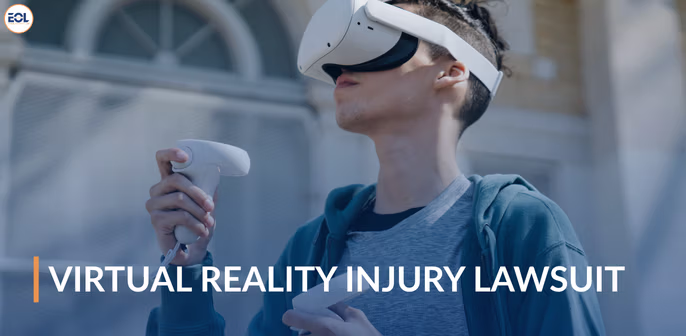
Virtual Reality Injury Lawsuit

Prevalence of VR Injuries

A 2023 study by Dignity Health researchers in Arizona analyzed US emergency room data and found that the first recorded VR injury occurred in 2017. By 2021, there were approximately 1,336 reported injuries related to VR technology. Common injuries among VR users include broken bones, cuts, contusions, and sprains. Risks such as tripping over objects and disorientation from head movements often lead to falls and other accidents in the virtual world.

What Are the Damages of Virtual Reality?

VR offers immersive experiences, but it also poses risks that can lead to various types of damage. Here’s a breakdown:

Financial Damages

  • Equipment damage: Repairs or replacements for damaged VR gear can be costly. 
  • Lost wages: Injuries may lead to missed work and reduced earning capacity. 
  • Medical expenses: Injuries can result in significant medical bills.

Long-term Health Issues

  • Postural problems: Improper VR posture may cause back, neck, or shoulder pain. 
  • Vision problems: Prolonged VR exposure may impact vision, though research is ongoing.

Physical Injuries

  • Eye strain and fatigue: Extended VR sessions can lead to eye strain, headaches, and fatigue. 
  • Falls and collisions: Users may trip or bump into objects, resulting in bruises, fractures, or concussions. 
  • Repetitive strain injuries (RSIs): Continuous controller use can cause strain on hands, wrists, or arms. 

 Psychological Effects

  • Anxiety and stress: Intense VR experiences can trigger anxiety or stress reactions. 
  • Desensitization: Exposure to intense VR content may desensitize users emotionally. 
  • Motion sickness: VR can cause symptoms like dizziness and nausea due to visual-physical motion disparity.

Social and Behavioral Impacts

  • Behavioral changes: VR may affect real-world behavior. 
  • Isolation: Excessive VR use can lead to social isolation.

What Is the Most Common Injury in VR?

Virtual reality is revolutionizing digital interactions, offering immersive experiences in gaming, education, healthcare, and beyond. Yet, as VR headset usage grows, so does the incidence of associated injuries. Common ones include:

  • Broken bones: Especially when caution is lacking or due to defective headsets. 
  • Concussions: Resulting from collisions or falls while wearing the headset. 
  • Disorientation: Leading to accidents. 
  • Eyestrain: Occurring with prolonged VR use. 
  • Lacerations: Caused by collisions with objects or individuals. 
  • Muscle strains and tears: Due to incorrect usage. 
  • Neck strain: Arising from improper headset adjustment. 
  • RSIs: From repetitive movement using VR equipment. 
  • Seizures: Particularly in individuals with photosensitive epilepsy.

How Do VR Injuries Happen?

VR injuries have become common since the first VR devices were introduced. As VR technology advances and becomes more popular in homes, the risk of injuries increases. Here’s how they happen:

  • False sense of reality: VR’s realistic nature can create a false sense of safety, causing users to take risks they wouldn’t normally take, such as jumping or running. 
  • Immersion and disconnection: Users often forget about real-world objects and people around them, leading to collisions, trips, and falls. 
  • Inadequate space: Using VR in a confined or cluttered space increases the risk of tripping over or bumping into objects, leading to injuries. 
  • Motion sickness: The difference between visual motion in VR and physical motion in the real world can cause motion sickness, leading to dizziness, nausea, and disorientation, which can result in accidents. 
  • Prolonged use: Extended VR use can cause physical strain from continuous use of controllers.

By understanding these risks, users can take steps to minimize injuries.

What Are the Best Practices for Setting Up a Safe VR Environment?

To set up a safe VR environment, follow these best practices:

  • Avoid VR if you have epilepsy, balance issues, or motion sickness. 
  • Create a safe environment by clearing the area of obstacles and hazards. Remove sharp objects and use VR while sitting unless the program requires standing or walking. 
  • Familiarize yourself with the space by walking around before starting. Ensure an open space to avoid collisions. 
  • Follow the manufacturer’s instructions for proper use and maintenance of the headset. 
  • Have a spotter to ensure you stay safe in the real world while using the headset. 
  • Limit VR sessions to 20 minutes to prevent disorientation and simulator sickness. Take breaks every 30 minutes to avoid eye strain and fatigue. 
  • Monitor your body for discomfort, such as headaches or eye strain, and stop if you experience any. Adjust focal settings to prevent eye strain. 
  • Sanitize the parts of the VR headset that touch your face between users and clean the headset regularly. 
  • Start with a simple program to avoid overwhelming yourself.

What Are the Legal Issues with Virtual Reality?

VR brings exciting new ways to interact with digital environments but also presents various legal challenges. Key legal issues include:

  • Accessibility and discrimination: VR environments must avoid discrimination based on race, gender, disability, or other protected characteristics. They need to be accessible to people with disabilities to comply with legal requirements or risk lawsuits. 
  • Contractual issues: VR platforms must navigate complex licensing agreements for third-party content and software. User agreements with VR providers need to be transparent about user rights and responsibilities. 
  • Intellectual property: Ownership and protection of intellectual property in VR are intricate due to digital content creation and sharing. Copyright infringement is a concern in VR environments. 
  • Jurisdiction and enforcement: Determining applicable laws and enforcing them is complicated with VR users and providers spread across different jurisdictions. Rapid VR development often outpaces existing laws, resulting in legal uncertainties. 
  • Privacy and data security: Protecting extensive user data collected by VR from unauthorized access and misuse is crucial. Users must be fully informed about data collection and provide consent to avoid legal complications. 
  • Product liability: VR manufacturers may face liability for injuries stemming from design flaws, manufacturing defects, or inadequate instructions. VR software developers could also be held responsible for harm caused by bugs or poor design. 
  • User safety and health: Increasing incidents of VR-related injuries can result in legal issues, particularly if caused by product defects or inadequate safety measures. Developers must caution users about potential anxiety or motion sickness risks.

What to Do If You Are Injured in a Metaverse Environment

Getting injured in a metaverse with a VR device can be disorienting. But act promptly to safeguard your health, preserve evidence, and strengthen your case if you decide to sue. Here’s what you must do:

  • Seek medical attention immediately: Even seemingly minor injuries should be assessed to ensure proper documentation for potential legal proceedings. 
  • Document the incident: Immediately jot down details of the incident, including the date, time, virtual environment, activities performed, and how the injury occurred. Taking photographs of injuries and relevant equipment is also crucial for preserving evidence. 
  • Preserve evidence: Keep the VR equipment intact and refrain from repairing or disposing of it. Additionally, collect witness statements from anyone present during the incident to further substantiate your case. 
  • Report the incident: Notify the VR headset manufacturer and the platform provider or game developer, if applicable, about the injury. Following their procedures ensures a record of your report and potential investigation. 
  • Consult a metaverse injury lawyer: Seek legal advice from a lawyer specializing in metaverse and VR-related injuries.

What Are Your Legal Options When You Have VR Injuries?

If you’ve sustained injuries in a VR environment, seeking legal advice is crucial. Here are your main legal options:

  • Class action lawsuits: Consider joining a class action lawsuit if multiple individuals have similar injuries from the same VR headset model. This collective approach allows pooling resources for legal action against the manufacturer. 
  • Personal injury lawsuits: For severe or unique injuries, filing a virtual reality injury lawsuit may be necessary. This allows for a tailored legal strategy to address your specific circumstances, seeking compensation for various losses such as medical expenses and lost wages. 
  • Seeking legal assistance: Connect with a lawyer specializing in product liability and personal injury cases to understand your options and pursue the best legal course. They’ll increase your chances of obtaining fair compensation while focusing on your recovery.

What Are the Legal Grounds for a Virtual Reality Injury Lawsuit?

If you’ve suffered an injury during VR activities, knowing the legal grounds for potential litigation is crucial. Here are the primary avenues for pursuing a virtual reality injury lawsuit:

  • Breach of warranty: This occurs when the VR system doesn’t meet the manufacturer’s safety and functionality promises, leading to legal action based on express or implied warranties. 
  • Consumer protection laws: Designed to prevent deceptive business practices, these laws address cases where VR systems were misleadingly marketed, or risks weren’t adequately disclosed. 
  • Negligence and liability: Legal examination of design flaws, manufacturing defects, and safety warnings determines liability, assessing negligence’s role in causing the injury. 
  • Product liability: Issues with the VR system’s design, manufacturing, or warnings leading to injury can result in legal action, holding responsible parties accountable. 
  • Strict liability: Unlike negligence, this focuses on whether the VR system was defective and caused injury, regardless of fault or negligence, covering manufacturing defects, design flaws, and inadequate warnings.

Who Can You Sue in a Metaverse Lawsuit?

When seeking legal recourse in a metaverse lawsuit, identifying the accountable parties is crucial. Here are the key entities you can potentially sue:

  • Employers: Employers may be subject to legal action if employees sustain injuries while using VR headsets for work-related activities, particularly if proper training or a safe working environment was not provided. 
  • Event organizers and venues: Organizers and venues could face legal challenges if they neglect to ensure user safety during public VR experiences or if their negligence leads to harm. 
  • Retailers and distributors: Retailers and distributors may face lawsuits if they sell faulty VR headsets or fail to uphold associated warranties or guarantees. 
  • Software developers: Legal action can be taken against developers if their VR software contains bugs, glitches, or lacks proper instructions, resulting in harm to users. 
  • VR content providers: Providers of VR content, such as games or simulations, may be sued if their offerings lack safety measures or contain design flaws contributing to user injuries. 
  • VR headset manufacturers: These companies can be held liable for issues like design defects, manufacturing flaws, or insufficient warnings associated with their VR headsets, leading to user injuries.

What is the Process for Filing a Virtual Reality Injury Lawsuit?

To file a VR headset injuries lawsuit, follow these steps:

  • Seek medical attention: Promptly seek medical care to document and treat any injuries sustained during the incident. 
  • Document the incident: Record details surrounding the incident, including location, circumstances, and contributing factors, and gather evidence like photographs or videos. 
  • Preserve evidence: Safeguard relevant evidence, such as equipment or physical surroundings, to support your case and maintain its integrity. 
  • Contact a personal Injury lawyer: Reach out to a qualified metaverse injury lawyer specializing in VR injury cases for legal guidance and to understand your options. 
  • Determine liability: Identify responsible parties, such as manufacturers or property owners, and assess their level of liability for the injury. 
  • File the metaverse lawsuit: Initiate legal proceedings by filing a formal complaint outlining the case details and legal grounds with the appropriate court. 
  • Trial: Present the case before a court of law, with both parties presenting evidence, testimonies, and arguments. 
  • Appeal: If dissatisfied with the trial verdict, appeal to a higher court for a review of the case.

What Are the Types of Compensation in a Virtual Injury Lawsuit?

If you’ve been injured while using a VR system, you may be eligible for various forms of compensation in a lawsuit. Here’s what you could pursue:

  • Disability and disfigurement: Compensation for permanent disabilities or changes in appearance. 
  • Legal fees and costs: Reimbursement for attorney fees and other legal expenses incurred during the lawsuit. 
  • Loss of enjoyment of life: Compensation for the impact on daily activities and hobbies. 
  • Lost wages: Reimbursement for income lost during recovery, as well as compensation for reduced future earning capacity. 
  • Medical expenses: Compensation for current and future medical bills, including treatments, medications, and therapies. 
  • Pain and suffering: Compensation for physical pain and emotional distress resulting from the injury. 
  • Property damage: Reimbursement for damaged VR equipment or other personal property. 
  • Punitive damages: Additional compensation to punish reckless behavior by the defendant.

Why Personal Injury Lawyers are Crucial in a Metaverse Lawsuit

In a virtual reality injury lawsuit, personal injury lawyers are essential for several reasons:

  • Determining liability: They have the skills to determine liability and hold the right parties accountable for the injury. 
  • Evidence collection: Metaverse lawyers collect and preserve crucial evidence such as digital logs and user agreements, vital for proving liability in metaverse cases. 
  • Legal expertise: The metaverse involves complex legal issues like product liability and negligence, which personal injury lawyers navigate adeptly to build a strong case. 
  • Legal support: Personal injury lawyers offer guidance and support throughout the legal process, regularly giving you virtual reality injury lawsuit update. 
  • Maximizing compensation: They work tirelessly to maximize your compensation, ensuring all aspects of your injury are accounted for. 
  • Negotiation skills: Personal injury lawyers negotiate fair settlements, ensuring you receive appropriate compensation based on the value of your claim. 
  • Trial representation: If necessary, lawyers provide effective representation in court, advocating for your case during trial proceedings.

Why You Need Ethen Ostroff Law in Your Lawsuit

A personal injury lawyer for your VR headset injuries lawsuit is crucial for navigating the complexities of your case, establishing liability, accurately valuing your damages, negotiating with insurance companies, and representing you in court. At Ethen Ostroff Law, we help clients navigate the legal landscape of emerging technologies like VR. Contact us today to discuss your concerns and ensure your rights are protected.

Get Free Consultation for your case​

  • Please complete the short form to have Ethen Ostroff Law review your case at no cost and in complete confidence.
  • We will get back to you within 48 hours to discuss your situation.
  • By submitting your case for review, you are agreeing to our Terms of Use.

Get Your Free Case Review

Find out if you qualify for compensation and learn your next steps – no cost, no obligation, just expert legal guidance.

Disclaimer: By submitting the form above and checking the consent box, you agree to our conditions and privacy policy and permit Ethen Ostroff Law to contact you via text messages, phone calls. Standard message rates may apply.


Success

We received your information. We’ll be in touch soon.

While in law school, he distinguished himself as Executive Editor of JURIS Magazine, received the prestigious CALI Excellence for the Future Award, and completed five hands-on internships that laid a strong foundation for his legal career.


Nicholas began his post-graduate career clerking for the Honorable Linda Rovder Fleming in the Cambria County Court of Common Pleas. From there, he quickly found his calling in workers’ compensation, personal injury, and Social Security disability law—areas where he could directly impact people’s lives in moments of crisis. He’s helped clients navigate complex legal claims, including securing a settlement exceeding $300,000.

Nicholas brings clear communication, genuine empathy, and an unrelenting drive to achieve the best outcomes for his clients. Whether he’s navigating a complex workers’ comp claim or pushing for a major settlement, he brings focus, dedication, and deep legal knowledge to every case.

He’s also a proud member of Pennsylvania Advocates for Justice and remains active in various professional legal organizations. Nicholas is licensed to practice law in Pennsylvania.

When he’s not fighting for the injured, Nicholas is enjoying time with his family, kicking a soccer ball around, hitting the golf course, or cheering on Pittsburgh’s local teams.

Joe Ring heads the workers’ compensation department at Ethen Ostroff Law, where he takes pride in fighting for injured workers.

Joe is a Philadelphia native and maintains deep roots in the area.  As the grandson of a Philadelphia Firefighter, son of a Philadelphia public school teacher, and veteran of the United State Marine Corps, he was taught to value service, dedication, and hard work.   He applies these values to every case and takes great satisfaction in representing hard-working clients with those same traits.

After obtaining his bachelor’s degree in history from St. Vincent College in Western Pennsylvania, he graduated from Villanova Law School in 2012 and, since then, has litigated hundreds of workers’ compensation hearings and trial depositions on behalf of both employers and injured workers.  During this time, Mr. Ring has written articles and presented Continuing Legal Education courses on developments in Pennsylvania Workers’ Compensation Law.  He is active in local professional organizations, and, in 2022, he served a Co-chairperson of the Philadelphia Bar Associations Workers’ Compensation Section.

Since coming to EOL in 2024, he has dedicated his practice entirely to helping injured workers navigate the system and obtain their rightful benefits.

Joe is licensed to practice in Pennsylvania.

Brandon Zanan heads the personal injury claim department with Ethen Ostroff Law.

Brandon’s education in both law and medicine assist him in expertly representing badly injured victims. Brandon has a Master’s Degree in Forensic Medicine from the Philadelphia College of Osteopathic Medicine, with a concentration in anatomy and pathology. With this knowledge,  Brandon is skilled at analyzing medical records and understanding injuries that are common in personal injury claims. He uses this expertise in conjunction with listening carefully to each client’s needs, in order to fiercely advocate for clients and tell their stories when they would not otherwise have a voice.

Brandon’s background includes a variety of experience and skills in various areas of civil practice. He is the author and editor of numerous books for the George T. Bisel Publishing Company, including “Pennsylvania Damages” and the “Pennsylvania Vehicle Code Annotated,” two texts that are frequently relied on by lawyers and judges across Pennsylvania as authoritative resources on personal injury law.

Brandon is a member of the Pennsylvania and Montgomery Bar Associations. He is also a member of Pennsylvania Association for Justice, and has served as an executive board member of the Montgomery American Inn of Court.

He is admitted to practice in the Commonwealth of Pennsylvania, the United States District Courts for the Eastern District of Pennsylvania and Middle District of Pennsylvania, the State of New Jersey, the United States District Court for the District of New Jersey, and in the Commonwealth of Virginia. Brandon has represented many clients in motor vehicle, premises liability, animal bite, and products liability cases across Pennsylvania and New Jersey and has obtained outstanding results with millions of dollars recovered for his clients.

He has been named a Pennsylvania Rising Star from 2021 onward. The “Super Lawyers-Rising Star®”, list recognizes no more than 2.5 percent of attorneys in each state

Brandon currently lives in Malvern with his wife Rachel and their son Max.

Ethen Ostroff Law, PLLC Terms and Conditions

Effective Date: July 10, 2024

General Information

Welcome to the website of Ethen Ostroff Law, PLLC (“EO”). By accessing or using our website, you agree to be bound by these Terms and Conditions (“Terms”). If you do not agree with these Terms, please do not use our website.

Use

EO hereby grants you a non-exclusive, non-transferable, revocable, limited right and license to access and use the Site solely for your personal use in accordance with these Terms of Use. You shall not, in any way, otherwise copy, reproduce, distribute, transmit, display, perform, reproduce, publish, license, modify, create derivative works from, sell, or exploit the Site.

EO may at any time, for any reason, and without notice or liability: (a) modify, suspend, or terminate operation of or access to the Site and related services, or (b) change, revise, or modify the Site and affiliated services.

Messaging and Automated Calls

When you opt-in, you will receive text messages (SMS/MMS) on your mobile number. These messages may contain information about your case, and the message frequency may vary from user to user. Please note that message and data rates may apply. If you wish to opt out of this service, you can do so anytime by simply texting “STOP” to the phone number. Once you text “STOP” to us, we will send you an SMS to confirm that you have been unsubscribed. If you encounter any issues, you can reply with the keyword “HELP” to get assistance. Please be aware that carriers are not responsible for any delayed or undelivered messages.

By providing your phone number and submitting a form on our website, you consent to receive communications, including automated calls, texts, and pre-recorded messages, from EO and its affiliates. These communications may include updates about your case, promotional offers, and other information. You understand that these calls may be generated using automated technology, and that standard message and data rates may apply.

Your consent to receive automated calls is not a condition of any purchase or service. By checking the consent box on our contact form or by calling our firm, you agree to these Terms and Conditions and provide your written consent to receive these communications. You may opt out of these communications at any time by replying STOP to any text message or by contacting us at [insert contact information].

State-Specific Compliance

EO complies with all federal and state laws regarding automated calls and telemarketing practices. Certain states have additional restrictions on the use of automated dialing systems and pre-recorded messages. The following states have more restrictive regulations:

  • California: Requires prior express written consent for automated calls.
  • Florida: Requires prior express written consent for automated calls and texts.
  • New York: Requires prior express written consent for automated calls.
  • Texas: Requires prior express written consent for automated calls.

If you are a resident of one of these states, EO will obtain your prior express written consent before making any automated calls or sending pre-recorded messages to you.

By submitting a form inquiry or calling our firm, you agree to us contacting you, and your checking the box when submitting your form inquiry serves as written consent.

Information and Legal Disclaimer

The information contained in this website is for informational purposes only, and should not be construed as legal advice. Testimonials and case results contained in this website are for demonstrative purposes only, and do not constitute a guarantee of any particular outcome in a specific case.

By requesting a free consultation with Ethen Ostroff Law, PLLC, you agree to the following:

  • Any information I submit is for review only, and there will be no charge for the initial consultation.
  • I have not entered into an attorney-client relationship with Ethen Ostroff Law, PLLC until such time as a formal written Retainer Agreement is signed by myself and a representative of Ethen Ostroff Law, PLLC. There is no guarantee that Ethen Ostroff Law, PLLC will accept my case.
  • Any information received by Ethen Ostroff Law, PLLC, prior to the execution of a written Retainer Agreement, is not subject to the Attorney-Client Privilege and is not considered confidential.
  • Additional information may be requested in order for Ethen Ostroff Law, PLLC to make a decision on whether or not to accept my case.
  • Because no attorney-client relationship has been established, I will remain personally responsible to meet all necessary deadlines applicable to my claim, until such time as Ethen Ostroff Law, PLLC makes a final decision. I acknowledge that I have not received any representations or legal opinions with respect to any time frames or deadlines that may be applicable to my claim.

No Relationship or Obligation Arises from Use of the Site

The law differs in every jurisdiction, and you should not rely on any opinion except that of an attorney you have retained, who has a professional duty to advise you after being fully informed of all the pertinent facts, and who is licensed in the applicable state, and is familiar with the applicable law. Internet subscribers, mobile application users, and online readers should seek professional counsel about their legal rights and remedies. You should not act or refrain from acting on the basis of any information found on the Site. Any actions or decisions about your legal rights should be based on the particular facts and circumstances of your situation, and appropriate legal advice from an attorney retained directly by you. EO EXPRESSLY DISCLAIMS ALL LIABILITY WITH RESPECT TO ACTIONS TAKEN OR NOT TAKEN BASED UPON ANY INFORMATION OR OTHER CONTENTS OF THIS SITE. Viewing the Site, or communicating with EO by Internet e-mail or through the Site does not constitute or create an attorney-client relationship with anyone. The content and features on the Site do not create, and are not intended to create, an attorney-client relationship, and shall not be construed as legal advice. The content and features of the Site, including means to submit a question or information, do not constitute an offer to represent you or otherwise give rise to an attorney/client relationship.

THE SITE IS PROVIDED “AS IS”. EO MAKES NO WARRANTIES, EXPRESS OR IMPLIED, REGARDING THE SITE AND ONLINE SERVICES AND HEREBY DISCLAIMS ALL WARRANTIES OF ANY KIND OR NATURE, INCLUDING, WITHOUT LIMITATION, THE IMPLIED WARRANTIES OF MERCHANTABILITY, FITNESS FOR A PARTICULAR PURPOSE, ACCURACY, AND NON-INFRINGEMENT. WITHOUT LIMITING THE FOREGOING, EO DOES NOT GUARANTEE THAT THE ONLINE SERVICES OR PRODUCTS WILL MEET YOUR REQUIREMENTS, OR WILL BE ERROR-FREE, UNINTERRUPTED, OR FREE OF VIRUSES OR OTHER HARMFUL COMPONENTS, OR THAT ANY DEFECTS WILL BE CORRECTED.

Accounts

To use some features of the Site, you may be required to create an account. In connection therewith, you agree to provide and maintain true, accurate, current, and complete information about yourself. You are responsible for maintaining the confidentiality of the information you hold for your account login, including your password, and for all Submissions made from your account. You agree to notify us immediately of any unauthorized use of your login. EO may suspend access to your account if it suspects illegal or improper use, or for other reasons, such as for account management purposes, at its sole discretion.

Confidentiality is Not Guaranteed

Information sent to Ethen Ostroff Law, PLLC. via Internet e-mail or through the Site is not secure and is done on a non-confidential basis. EO may make reasonable efforts to keep communications private, but because of the nature of Internet communications and the absence of an attorney/client relationship, we cannot promise or guarantee confidentiality.

DISCLAIMER – This Site Does Not Provide Medical Diagnosis or Advice

The content provided on the Site, such as documents, text, graphics, images, videos, news alerts, pharmaceutical drug recalls, prescription medication history, or information on litigation concerning the foregoing topics, or other materials, is for informational purposes only. The information is not intended to be a substitute for professional medical advice, diagnosis, or treatment. Always consult a physician for diagnosis and treatment of any medical condition or for any questions you may have regarding a health concern. Never disregard professional medical advice, alter a prescription plan in any way, or delay or refrain from seeking medical advice because of something you have read or seen on the Site. Links to other sites are provided for information only. Use of trade names is for identification only and does not constitute endorsement by EO.

Without limiting the generality of the foregoing, the Site may present information about pharmaceutical drug recalls, which is for information purposes only. Such information is not necessarily the most current information on the subject and may or may not be updated based on the last information concerning such recalls. Do not make any decisions regarding medication or medical providers based on information from the Site, including but not limited to information we provide about drug recalls.

EO Is Not Responsible for Content; Limitation on Liability

EO may periodically change, remove, or add the material on the Site without notice. This material may contain technical or typographical errors. EO DOES NOT GUARANTEE ITS ACCURACY, COMPLETENESS OR SUITABILITY. EO assumes no liability or responsibility for any errors or omissions in the contents of the Site. Your use of the Site is at your own risk. Under no circumstances shall EO or any other party involved in the creation, production, or delivery of the Site be liable to you or any other person for any indirect, special, incidental, or consequential damages of any kind arising from your access to, or use of, the Site. TO THE MAXIMUM EXTENT PERMITTED BY APPLICABLE LAW IN NO EVENT SHALL EO BE LIABLE FOR ANY SPECIAL, INDIRECT, OR CONSEQUENTIAL DAMAGES RELATING TO THIS MATERIAL, FOR ANY USE OF THIS WEBSITE, OR FOR ANY OTHER LINKED WEBSITE.

Third-party Web Sites

The Site contains links to third-party websites for the convenience of our users. EO does not endorse any of these third-party sites and does not imply any association between EO and those sites. EO does not control these third-party websites and cannot represent that their policies and practices will be consistent with these Terms of Use. If you use links to access and use such websites, you do so at your own risk. EO is not responsible for the contents or availability of any linked sites. These links are provided only as a convenience to the recipient. These Terms only apply to the Site and do not apply to any linked sites. We encourage you to read and understand the terms of use of any linked sites that you visit. Links do not imply that we sponsor, endorse, are affiliated with or associated with, or are legally authorized to use any trademark, trade name, service mark, design, logo, symbol, or other copyrighted materials displayed on or accessible through any linked site.

EO Clients

Only individuals who have entered into a mutually signed retainer agreement with EO are EO clients (“EO Clients”).

Legal and Ethical Requirements

EO has tried to comply with all legal and ethical requirements in compiling the Site. We welcome comments about our compliance with the applicable rules and will update the Site as warranted, upon learning of any new or different requirements.

Ethen Ostroff Law reserves the right to refer or sell leads that come through any of Ethen Ostroff Law’s marketing.

Ethen Ostroff Law also may sell leads on certain campaigns generated in association with third party marketing companies.

Governing Laws in Case of Dispute; Jurisdiction

These Terms of Use shall be governed by and construed in accordance with the laws of the State of Pennsylvania, USA, without regard to any choice of law principles. Any and all disputes arising hereunder shall be governed as set forth in the Arbitration section below.

Submissions

You are solely responsible for any information, content, or material you transmit to or through the Site (“Submissions”). You understand that Submissions are considered non-confidential and non-proprietary. Furthermore, you grant EO an unrestricted, irrevocable, perpetual, transferable, sublicensable, worldwide, royalty-free license to use, copy, reproduce, display, publish, publicly perform, transmit, and distribute any Submission, without compensation or accounting to you or anyone else. You represent and warrant that: (a) you have the right to submit the Submission to EO and grant the licenses as described above; (b) EO will not need to obtain licenses from any third party or pay royalties to any third party for its use of the Submission; (c) the Submission does not infringe any third party’s rights, including intellectual property rights and privacy rights; and (d) the Submission complies with these Terms of Use and all applicable laws and regulations.

EO takes no responsibility and assumes no liability for any Submission.

Arbitration

Any and all claims by you arising out of or related to the Site or your use thereof may be resolved only through a binding arbitration proceeding to be conducted under the auspices of the Commercial Arbitration Rules of the American Arbitration Association in Montgomery County, Pennsylvania. Both your agreement to arbitrate all controversies, disputes and claims, and the results and awards rendered through the arbitration, will be final and binding on you and may be specifically enforced by legal proceedings. Arbitration will be the sole means of resolving such controversies, disputes and claims, and you waive your rights to resolve such controversies, disputes and claims by court proceedings or any other means. You agree that judgment may be entered on the award in any court of competent jurisdiction and, therefore, any award rendered shall be binding. The arbitrator may not consolidate more than one person’s claims, and may not otherwise preside over any form of a representative or class proceeding. You understand that by agreeing to arbitration as a mechanism to resolve all controversies, disputes and claims between us, you are waiving certain rights, including the right to bring an action in court, the right to a jury trial, the right to broad discovery, and the right to an appeal. You understand that in the context of arbitration, a case is decided by an arbitrator (one or more), not by a judge or a jury.

International Use

The Site is controlled, operated, and administered by EO from offices within the United States of America and is only intended for use therein. We make no representation regarding use of the Site outside of the United States.

Other Terms

If, for any reason, our Terms of Use, Privacy Policy, or any portion thereof to be unenforceable, such provision shall be enforced to the maximum extent permissible so as to give the intended effect thereof, and the remainder of these Terms of Use and Privacy Policy shall continue in full force and effect. EO’s failure to act with respect to a breach by you or others does not waive our right to act with respect to that breach or subsequent or similar breaches. No consent or waiver by EO hereof will be deemed effective unless in writing. These Terms of Use, together with our Privacy Policy, as each is currently posted, constitute the entire agreement between EO and you with respect to your use of the Site and supersede all previous written or oral agreements relating to the subject matter hereof, that this agreement shall not supersede, restrict, or replace any agreements governing the attorney-client relationship between EO and EO Clients.

EO may, in its sole discretion and without prior notice, block and/or terminate your access to the Site and if we determine that you have violated these Terms of Use or other terms or agreements or that may be associated therewith or if you use the Site in a way that we deem, in our sole discretion, to be an unacceptable use.