
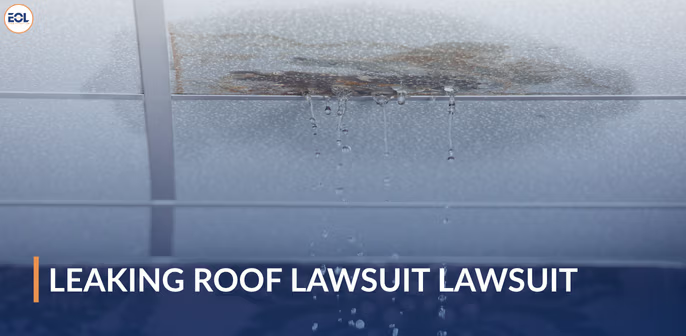
When you notice stains or molds on your ceiling, chances are you have a roof leak. One of the usual reasons for roof leaks is the poor installation of numerous aspects of a building. Unfortunately, if you don’t have it repaired, the leaking will only get worse – and expensive. Improper installations and subpar constructions are responsible for a wide range of causes that result in water damage. This includes faulty pipes, leaking roofs, land grading, and more. If your house or building’s leaking roof is causing disruption to your day-to-day life, you can file a claim against the insurance company or file a leaking roof lawsuit to help you get compensation for all the losses and injuries you suffered. Just make sure to keep all the invoices and receipts of leaking roof repairs to help substantiate your claims for loss and damages. This will also help prove to your insurance company that you are doing your best to maintain the roof and prevent further damage.
The dwelling coverage portion of your homeowner’s insurance covers the house structure, including the roof. The type of roof damage covered by your leaking roof lawsuit claim depends on the policy’s terms and why your roof needs to be repaired or replaced. Generally, the insurance policy covers issues that are sudden or accidental and caused by certain events such as hail, fire, wind, or the weight of snow.
In some leaking roof claims, the roof’s lifespan is shortened because of the damages. Your insurer may cover the cost of replacing the entire roof even if it’s only partially damaged. For instance, if a homeowner has asphalt shingles damaged by hail strikes, an adjuster would count the total strikes that occurred in a section to regulate the impact on the lifespan of the roof. If there are enough strikes, the roof lifespan is deemed substantially impacted, which means the roofing needs to be replaced.
Even if a roof is not taking in the water right now, the erosion or strikes compromise the lifespan of the roof. Thus, your roof will not last as long as it should and must be replaced.
If the materials to fix your roof are unavailable, the insurance company will replace your entire roof. For instance, if you have slate tile that you can’t get anymore, you may have to replace the entire roof to ensure the materials match.
Home insurance companies in the past years have been walloped by numerous expensive roof claims. To combat this, many home insurers have implemented different coverage levels for wind and hail damage versus roof damage from other causes. You might find that:
Since it is your responsibility to maintain your home, policies don’t cover damage caused by the lack of maintenance. Therefore, repairing your roof due to wear and tear or replacing it because its lifespan is over will not entitle you to compensation from the insurance company.
Lack of maintenance could also come back to bite you after a storm. For example, if your roof was old or not well-maintained before the storm, you will have trouble getting the full reimbursement.
Homeowner’s insurance does not cover damage caused by floods or earthquakes, such as roof damage. So, if you live in an area at risk of these disasters, it’s better to consider getting earthquake insurance or flood insurance instead.
Here are five tips to keep in mind when filing a roof damage claim.
The first step to getting a fair leaking roof settlement is understanding your policy and the scope or coverage. There is no point fighting for coverage that you never had. For instance, is the roof damage actually covered, or did you choose to exclude wind and hail damage? Is your coverage for replacement cost or actual cash value?
If you find that there is roof damage from a storm, you must inspect your entire home, not only the roof. In addition, you will want to know the scope of the damage when you contact your insurer to start a claim.
Get an estimate for the repair based on what you had, not how you want to change things. Therefore, it is better not to rely on the adjuster to determine the repair cost of the roof. Instead, get a written estimate with a roofing company’s letterhead and the company’s contact information.
Time plays an important role when dealing with a roof claim. The longer a roof sits with damage, the more weather and dirt it receives. This might make it less obvious to see the damage since it could look like wear and tear.
Keep records from the start, including photos, who you spoke to and when, and what they told you.
What starts as a seemingly simple leaking roof lawsuit could blow up into a nightmare if you don’t hire professional lawyers who have experience handling such cases. So, hire only the right leaking roof attorney to guide you through the process of filing.
Whenever there’s roof damage, it’s crucial to protect your home from further damage. Preventing further damage when possible is often a requirement in homeowner’s policies, and further damage may not be covered. Discuss your case with the top leaking roof lawyers to know more about what you should and shouldn’t do as you prepare to make a claim.
Don’t let the insurance company boss you around. Remember that insurance companies are a business and may not have your best interests in mind when it comes to paying out roof damage claims. Nonetheless, convincing them with substantial proof will help you get a fair leaking roof lawsuit settlement without any hassle.
Don’t get multiple estimates. If you get multiple estimates, your insurance company will want to see all of them and may only accept the lowest one. The lowest estimate may not be the best quality.
Consider getting roofing materials that can get you an insurance discount. Research materials that will be more durable than your past roof. Your insurance company might be willing to offer a discount for impact-resistant roofing. Check with the insurer on roof material discounts before you make a final pick.
Know that you are entitled to fair trade pricing. Therefore, ensure you have a solid repair estimate.
Finally, it doesn’t matter whether you have a large or complicated claim – consider hiring a skilled and experienced leaking roof attorney to work on your behalf.
To help establish and prove your leaking roof lawsuit, the victim needs the support and assistance of a reliable lawyer. Ethen Ostroff Law can provide you with the best references to top leaking roof lawyers in Philadelphia who can help prove your claim or win your lawsuit. What are you waiting for? Contact Ethen Ostroff Law now at 610-510-8883 ( by calling this number, you consent to receive SMS updates from Ethen Ostroff Law) or Submit Form to get free consultation.
His career began in public service as a Surveillance Officer in Maricopa County, where he gained firsthand experience in high-stakes decision-making and developed a deep sense of discipline and accountability. He later served as Chief Operating Officer of a fast-growing law firm, driving efficiency, revenue growth, and team development. Today, Ryan focuses on helping law firms reach their full potential by aligning people, processes, and long-term vision. A strategic thinker and empowering leader, Ryan is passionate about developing others and guiding organizations through meaningful, lasting growth.
Effective Date: 10/15/2026
Ethen Ostroff Law, PLLC (“EOL,” “we,” “us,” or “our”) respects your privacy. If you are reaching out to us after an injury, we know you may be sharing personal details during a hard time. This Privacy Policy explains what information we collect when you visit ethenostrofflaw.com (the “Site”), how we use it, who we share it with, and the choices you have.
This Privacy Policy works together with our Terms of Use. By using the Site, you agree to the practices described here. If you do not agree, please do not use the Site.
Visiting the Site, submitting a form, chatting with us online, or sending us an email does not create an attorney-client relationship. An attorney-client relationship begins only when you and EOL sign a written Retainer Agreement. Until then, information you send us is not protected by attorney-client privilege and is not considered confidential. Please do not send sensitive details about your matter until we have spoken with you.
When you request a free consultation, fill out a form, use our live chat, call, text, or email us, you may give us:
When you visit the Site, we and the third-party tools described in section 8 may automatically collect:
We may share your information with:
If you opt in to text messages, you may receive messages about your inquiry or case. Message frequency varies, and message and data rates may apply. Reply STOP at any time to opt out, or HELP for help. Mobile phone numbers and text message opt-in consent will not be shared with third parties or affiliates for their own marketing purposes.
We do not send the details you type into our intake forms, contact forms, or live chat, such as information about your injury or legal matter, to Google, Meta, TikTok, Reddit, or any other advertising platform.
The Site uses cookies, pixels, and similar tools. A cookie is a small file stored in your browser. A pixel is a small piece of code that loads when you visit a page and sends information about your visit to the company that provides it. We use Google Tag Manager to load and manage these tools.
The table below lists the third-party tools on the Site and what we use them for.
| Provider | What we use it for | Provider privacy policy |
| Google Tag Manager | Loads and manages the other tools listed here. It does not build a profile of you. | policies.google.com/privacy |
| Google Analytics | Understanding how visitors use the Site, such as pages viewed and how they found us. | policies.google.com/privacy |
| Google Ads | Measuring ad conversions and showing our ads to past visitors. | policies.google.com/privacy |
| Meta Pixel (Facebook and Instagram) | Measuring ad performance, showing our ads to past visitors, and reaching similar audiences. | facebook.com/privacy/policy |
| TikTok Pixel | Measuring ad performance, showing our ads to past visitors, and reaching similar audiences. | tiktok.com/legal/privacy-policy |
| Reddit Pixel | Measuring ad performance, showing our ads to past visitors, and reaching similar audiences. | reddit.com/policies/privacy-policy |
| Intaker | Powers the live chat on the Site so you can reach our intake team. | intaker.com |
| OpenWidget (ChatBot.com) | Powers the chat assistant on the Site. | openwidget.com |
| Google reCAPTCHA | Protects our forms from spam and automated abuse. | policies.google.com/privacy |
| Google Maps | Displays maps of our office locations. | policies.google.com/privacy |
These tools may collect the information listed in section 3. If you give us your email address or phone number, a scrambled (hashed) version may be sent to an advertising platform so it can match your visit to an existing account.
Google, Meta, TikTok, and Reddit may combine the information they receive with other data they hold about you and use it under their own privacy policies. You can learn how Google uses information from sites that use its services at policies.google.com/technologies/partner-sites.
Some state privacy laws, including California’s, may treat sharing information through advertising pixels as a “sale” or “sharing” of personal information, or as targeted advertising. Depending on where you live, you may have the right to know what information we hold about you, to ask us to correct or delete it, and to opt out of its sale or sharing. To make a request, contact us using the information in section 15. We may need to verify your identity before we respond. We will not treat you differently for using these rights.
We use reasonable administrative, technical, and physical safeguards to protect your information. No method of sending or storing data over the internet is completely secure, so we cannot guarantee the security of information you send us.
We keep your information as long as we need it for the purposes described in this policy, including to meet legal, ethical, and record-keeping obligations.
The Site is not directed to children under 13, and we do not knowingly collect personal information from them online. If a parent or guardian is contacting us about a child’s injury, the parent or guardian should submit the inquiry.
We may update this policy when we add, change, or remove tools on the Site or change how we handle information. We will post the updated version here and change the effective date above.
If you have questions about this policy or want to make a privacy request, contact us:
